When you think of Pixar, you likely picture groundbreaking animation, heartfelt storytelling, and perhaps, a parade of beloved sequels. From Woody and Buzz's enduring adventures to the emotional journeys of Nemo and Dory, sequels have become a significant part of Pixar's legacy. Yet, amidst this strategy, one early gem stands out for its conspicuous absence from the sequel parade: A Bug's Life. Its unique place in Pixar's history begs a closer look at the studio's evolving approach to sequels and why, despite its success, Flik's story remains a standalone animated feature.
At a Glance: Pixar's Sequel Strategy & A Bug's Life's Place
- Pioneering Spirit: A Bug's Life (1998) was Pixar's second feature film, following Toy Story, and a critical and commercial success.
- Sequel Anomaly: It's the only one of Pixar's first six original films that has not received an animated direct sequel.
- The "Real Bug's Life" Connection: Disney+ released two nature documentary series, "A Real Bug's Life" (2024) and "A Real Bug's Life 2" (2025), inspired by the film, but these are not animated remakes or direct continuations.
- Evolving Strategy: Pixar initially shied away from sequels but has increasingly embraced them, balancing original stories with continuations of popular franchises.
- Fan Hopes Persist: Despite the long wait, discussions among fans and experts continue about the potential for an animated A Bug's Life 2.
The Unspoken Rule of Pixar Sequels (and Its Exceptions)
Pixar Animation Studios built its legendary reputation on originality. In its early days, the mantra seemed to be "one and done." Each film was a complete, self-contained story, a fresh world to explore. Then came Toy Story 2 in 1999, initially conceived as a direct-to-video release, but elevated to theatrical status due to its burgeoning creative ambition. It was a smash hit, proving that sequels could not only be financially lucrative but also creatively on par, if not superior, to their predecessors.
This success subtly shifted the landscape, but the studio remained cautious. For years, Toy Story was the only franchise with multiple installments. Films like Monsters, Inc., Finding Nemo, and The Incredibles were massive hits that eventually received sequels, but often after a significant gap, allowing new stories to organically develop rather than being rushed. The philosophy was that a sequel had to have a compelling reason to exist, a new story to tell, rather than just cashing in on brand recognition.
However, the sheer commercial power of these franchises, especially under the broader Disney umbrella, eventually led to a more regular sequel output. While still striving for quality, the economic realities of blockbuster filmmaking meant that beloved characters often returned for new adventures. This makes the case of A Bug's Life all the more intriguing.
A Bug's Life: An Early Gem in a Unique Position
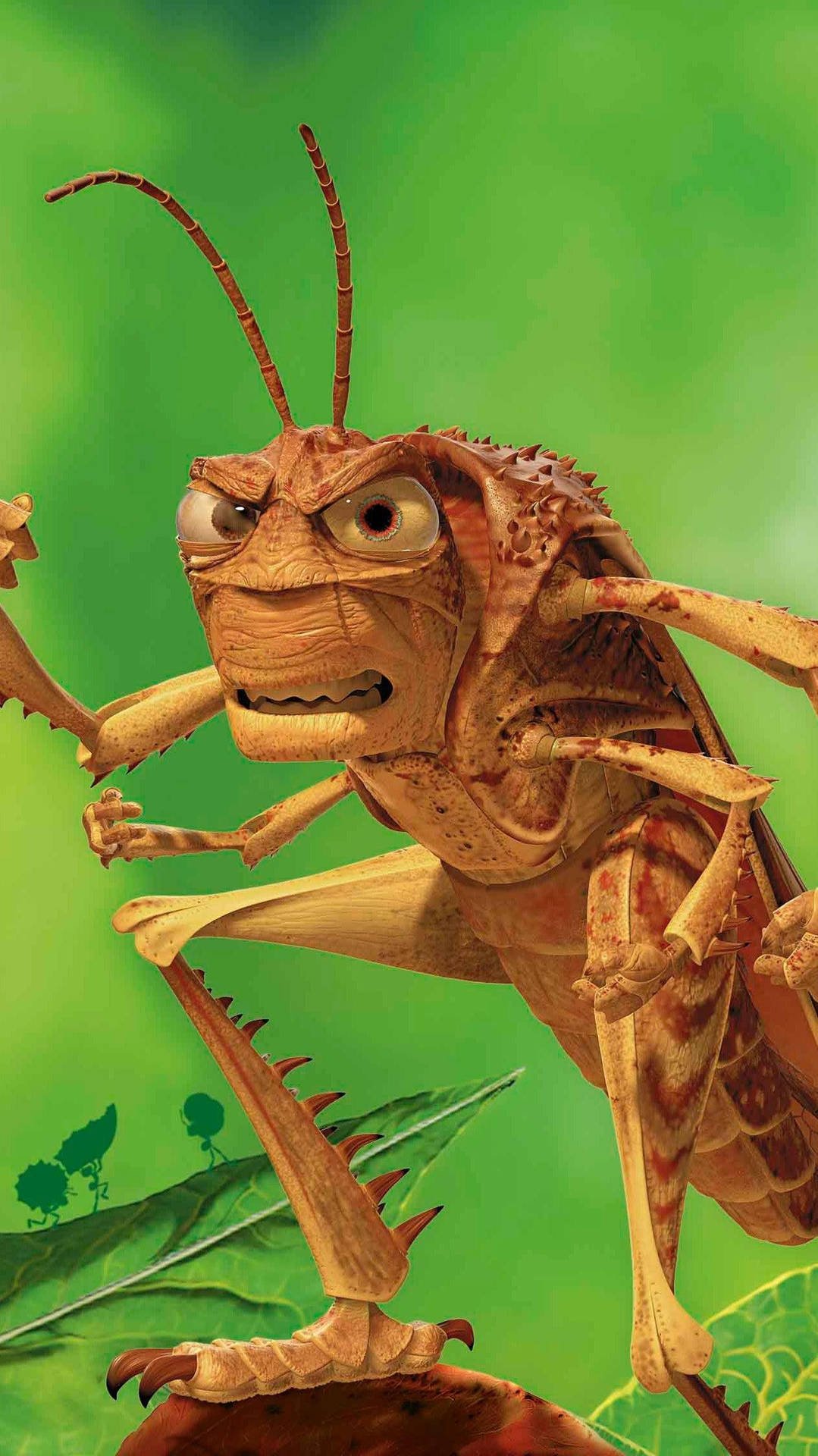
Released in 1998, just three years after the revolutionary Toy Story, A Bug's Life showcased Pixar's burgeoning talent for world-building, character animation, and storytelling. Directed by John Lasseter and co-directed by Andrew Stanton, it told the classic underdog tale of Flik, an inventive ant who recruits a troupe of circus bugs to save his colony from oppressive grasshoppers led by the menacing Hopper.
The film was a commercial success, raking in over $360 million worldwide against a reported budget of $45 million. It was critically well-received, praised for its innovative animation, humor, and heartwarming narrative. Key voice talents like Dave Foley (Flik), Kevin Spacey (Hopper), Julia Louis-Dreyfus (Princess Atta), and Hayden Panettiere (Dot) brought memorable characters to life, making the tiny world of insects feel grand and relatable.
Yet, despite its strong performance and cultural impact, A Bug's Life holds a curious distinction: it's the only one of Pixar's first six original films (Toy Story, A Bug's Life, Toy Story 2, Monsters, Inc., Finding Nemo, The Incredibles) that has not yet received a direct animated sequel. Every other film in that initial slate eventually got a follow-up, and in some cases, multiple ones. This makes A Bug's Life's standalone status a fascinating anomaly in Pixar's evolving sequel strategy.
Why No Animated "A Bug's Life 2"?
The question of "Why no A Bug's Life 2?" has fueled discussions among fans and industry experts for decades. Several factors likely contributed to this decision, or rather, the lack of a decision to move forward with a sequel:
Box Office Performance vs. Peer Films
While A Bug's Life's $360 million worldwide gross was impressive for its time, it didn't quite reach the stratospheric heights of later Pixar films. Toy Story (1995) earned $373 million, a very similar figure, but kicked off the studio. Monsters, Inc. (2001) grossed $577 million, Finding Nemo (2003) pulled in $940 million, and The Incredibles (2004) secured $631 million. In relative terms, A Bug's Life was a success, but perhaps didn't scream "must have a sequel immediately" in the same way some of its successors did, especially as production costs rose.
Story Completion and Perceived Potential
One prevailing theory suggests that the story of A Bug's Life felt intrinsically complete. Flik found his place, the ants learned to stand up for themselves, and the grasshopper threat was definitively dealt with. Unlike, say, Monsters, Inc., which left open the door to explore the human world from the monsters' perspective, or Finding Nemo, which naturally lent itself to Dory's own journey of self-discovery, A Bug's Life's narrative arc had a satisfying resolution. Crafting a compelling new story that didn't feel forced or repetitive could have been a significant challenge for the creative team. What new conflicts could arise that weren't simply a rehash of the original struggle?
Creative Shifts and Prioritization
Pixar's creative wellspring has always been prolific. The years following A Bug's Life saw the studio embark on an incredibly ambitious slate of original films: Monsters, Inc., Finding Nemo, The Incredibles, Cars, Ratatouille, WALL-E, and Up. These were all fresh concepts that demanded significant creative resources. It's plausible that the creative leads, including Lasseter and Stanton, were more interested in developing new worlds and characters than revisiting the ant colony. New directors also emerged, bringing their unique visions to the studio. With so many fresh ideas vying for attention, A Bug's Life 2 might simply have been sidelined.
The Disney Acquisition and Sequel Influence
The dynamic of Pixar's sequel output undeniably shifted after Disney acquired the studio in 2006. While Pixar maintained significant creative autonomy, the financial imperative of leveraging established brands grew. This period saw more sequels for films like Cars, Monsters, Inc., and Finding Nemo. Yet, even in this era, A Bug's Life remained untouched. Perhaps its relatively lower box office compared to the true titans or the perceived lack of a strong sequel concept kept it off the priority list even as other franchises expanded.
The "Real Bug's Life" Phenomenon: A Different Kind of Legacy
While an animated sequel to A Bug's Life has remained elusive, the film recently inspired a fascinating, albeit different, kind of follow-up. In 2024, National Geographic released "A Real Bug's Life" on Disney+. This Disney+ series, narrated by Awkwafina, is not a live-action remake of the animated film, nor does it feature its characters. Instead, it's a stunning nature documentary series that chronicles "nine different micro bug worlds around the globe," offering an unprecedented look into the lives of real insects.
The series quickly found an audience, reaching No. 5 on Disney+'s Top 10 in the U.S., a testament to both the enduring fascination with the insect world and the original film's lasting impact on popular culture. Examples of its detailed focus include a jumping spider in New York and a Costa Rican orchid bee, revealing the actual drama and wonder of insect existence.
A follow-up, "A Real Bug's Life 2," dropped on January 15, 2025, also with Awkwafina narrating. This second season pushes the boundaries of nature filmmaking even further, employing cutting-edge technology like motion-controlled cameras, ultra high-speed lenses, and first-person drones. Viewers can witness intimate details of a tiger beetle in Malaysia, a damselfly in Britain, and a Smoky Mountain luna moth. Both documentary series, alongside the original animated film, are readily available for streaming on Disney+, creating a unique cross-media legacy for the A Bug's Life brand.
This documentary series, while not a direct animated sequel, fulfills a different kind of role. It expands the idea of "a bug's life" and brings it to a new generation through the lens of scientific realism and technological marvel. It serves as a spiritual successor, celebrating the very creatures the original film anthropomorphized, perhaps suggesting that for some stories, the most valuable continuation lies not in fiction, but in shedding light on the real world that inspired it.
Fan Theories and What-If Scenarios
Despite the documentary series, the yearning for an animated A Bug's Life 2 persists among dedicated fans. The discussions often revolve around:
- Potential Storylines: What new threats could emerge? Could the ants face environmental challenges, new predatory species, or conflicts with other colonies? Could the human world inadvertently impact their lives more directly?
- Character Returns: The core appeal lies in seeing Flik, Princess Atta, Dot, and the beloved circus bugs (Heimlich, Francis, Slim, Tuck & Roll, Gypsy, Manny, Rosie, Dim) again. How would their characters have evolved? Would Flik's inventions take center stage in a new way? Would Atta be a wise queen, and Dot a brave warrior?
- Technological Advancements: Imagine how Pixar's current animation capabilities, light rendering, and character detail could bring the insect world to life today, far beyond what was possible in 1998. The sheer visual potential is immense.
Many believe there's still ample room for a compelling narrative that could explore themes of leadership, innovation, or even the ecological impact on a micro-level. For a deeper dive into these speculative possibilities, you might want to Explore A Bugs Life 2 movie and the ongoing fan discussions around it. The potential remains fertile ground for imagination.
Pixar's Evolving Sequel Philosophy: A Balancing Act
Pixar's journey from a strictly original content studio to one that embraces sequels, albeit carefully, reflects both artistic evolution and commercial reality. The success of films like Toy Story 4 and Incredibles 2 proved that with the right story and creative team, sequels could be just as impactful as their predecessors. However, the studio has also faced criticism when sequels felt less inspired or when too many popular films received follow-ups.
Today, Pixar seems to be striving for a balance. They continue to release groundbreaking original films like Soul, Luca, and Turning Red, while also revisiting beloved franchises when a strong story demands it. This means that the door for any classic Pixar film to receive a sequel is never entirely closed, but the bar for entry remains high. A potential A Bug's Life 2 would have to meet Pixar's stringent creative standards, offer a fresh perspective, and justify its existence beyond mere nostalgia.
Addressing Common Questions and Misconceptions
Is "A Real Bug's Life" a remake of the animated movie?
No, absolutely not. "A Real Bug's Life" is a nature documentary series produced by National Geographic for Disney+. It is inspired by the concept of the original film – exploring the world of bugs – but it features real insects in their natural habitats, not the animated characters or storyline from the 1998 movie. It's a celebration of actual insect life, employing cutting-edge cinematography to bring that world to viewers.
Why isn't A Bug's Life as frequently discussed as Toy Story or Finding Nemo?
While a success, A Bug's Life often finds itself overshadowed by other Pixar films that either had more groundbreaking animation for their time (Toy Story), achieved truly massive box office numbers (Finding Nemo), or became sprawling franchises (Toy Story, Cars). Its release also coincided with DreamWorks' Antz, leading to a perceived rivalry that might have diluted its unique impact. Additionally, the lack of sequels means it hasn't had the regular cultural touchstones to keep it consistently in the public conversation in the same way its peer films have.
Could an animated A Bug's Life 2 still happen?
While there are no confirmed plans, and the studio has focused on other projects for decades, the possibility is never zero in Hollywood. If a compelling, truly original story concept emerged, and if the right creative team were passionate about telling it, Pixar could theoretically revisit the world of Flik and his friends. However, given the passage of time and the studio's current slate, it remains a long shot. The success of "A Real Bug's Life" on Disney+ might demonstrate a renewed audience interest in the 'bugs' theme, but it doesn't directly translate to an animated sequel.
The Enduring Value of Originality (And a Bug's Life's Place in It)
A Bug's Life holds a unique and significant place in Pixar's history. It was a crucial stepping stone in the studio's early development, demonstrating their ability to craft compelling stories outside the Toy Story universe. Its standalone nature, while perhaps puzzling to some, also speaks to a time when Pixar prioritized original narratives above all else. It's a complete, charming, and visually impressive film that stands on its own merits.
The inspiration for "A Real Bug's Life" shows that the initial film's premise has lasting power, even if its animated characters haven't returned to the big screen. It reminds us that sometimes, a story doesn't need a direct sequel to continue influencing and entertaining new generations. For fans, A Bug's Life remains a testament to Pixar's early genius, a vibrant world waiting to be rediscovered, a tale of courage and ingenuity that resonates just as strongly today as it did over two decades ago. And in an increasingly sequel-heavy world, there's a quiet strength in a story that knows when to end, leaving its characters to live happily ever after in our imaginations.