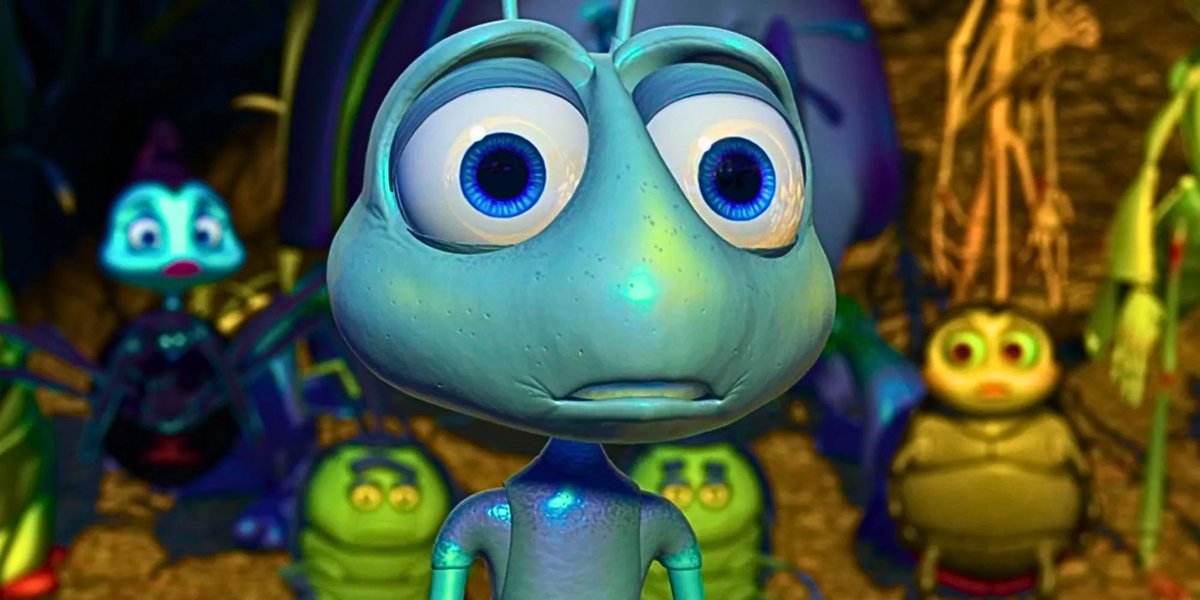
For nearly three decades, A Bug's Life has held a special place in the hearts of Pixar fans. Its innovative animation, memorable characters, and heartwarming story about an underdog ant named Flik captivated audiences worldwide. Yet, unlike many of its Pixar brethren, the question "Why A Bug's Life 2 hasn't happened (yet)?" remains a constant hum in the background, a curious mystery in a studio known for revisiting beloved worlds.
It’s a fair question, especially when you consider the sprawling universes of Toy Story, Cars, Monsters, Inc., and even Incredibles that have expanded through sequels and spin-offs. Why has Flik's tiny world remained untouched since 1998? Is it a matter of creative choice, logistical hurdles, or something else entirely? Let's dive deep into the fascinating reasons behind this animated enigma.
At a Glance: Why No A Bug's Life 2?
- Pixar's Evolving Sequel Philosophy: A shift from sequel-heavy periods back to prioritizing original stories.
- Director John Lasseter's Departure: The original film's director, who championed its story, is no longer at Pixar.
- Lack of a Compelling Story: Studio leadership often states a sequel must have an essential story to tell.
- Voice Cast Challenges: Reassembling the original, iconic cast presents difficulties, especially with certain actors' public issues.
- Focus on New IPs: Pixar's current strategy leans towards creating fresh, groundbreaking narratives.
- The Original Stands Strong: Many believe its standalone status preserves its unique charm and legacy.
The Enduring Legacy of the Original Colony
Before we dissect the reasons for its absence, it's crucial to appreciate A Bug's Life for what it was. Released in 1998, it was only Pixar's second feature film, following the groundbreaking Toy Story. It pushed the boundaries of computer animation, particularly in rendering vast crowds, intricate natural environments, and complex character designs for dozens of insect species.
The film was a critical and commercial success, grossing over $363 million worldwide on a $120 million budget. Critics lauded its humor, heart, and visual innovation. It even famously beat DreamWorks' similarly-themed Antz to theaters, creating a minor "bug war" in Hollywood. Its narrative, a clever reinterpretation of Aesop's Fable "The Ant and the Grasshopper" mixed with Akira Kurosawa's Seven Samurai, resonated deeply. Flik's journey from bumbling inventor to unlikely hero provided a powerful message about individuality and collective strength.
So, the success and affection for the original film aren't the issue. The reasons for a sequel's absence are far more nuanced, deeply embedded in Pixar's unique creative culture and the shifting tides of the animation industry.
Pixar's Evolving Stance on Sequels: A Creative Pendulum Swing
Perhaps the most significant factor in understanding why A Bug's Life 2 hasn't materialized lies in Pixar's own philosophical journey regarding sequels. The studio's approach has evolved dramatically over the decades, often swinging like a pendulum between prioritizing original stories and revisiting popular IPs.
Early Pixar: Originals Reign Supreme
In its early days, Pixar was fiercely committed to originality. Films like Toy Story, A Bug's Life, Monsters, Inc., and Finding Nemo were all singular, groundbreaking stories. The idea of a sequel was almost an afterthought, a creative compromise rather than an inherent goal. Toy Story 2 was initially conceived as a direct-to-video release, only to be upgraded to theatrical after a creative overhaul, proving sequels could indeed enhance an original if the story was compelling enough.
The Sequel Era: Commercial Pressures and Disney Influence
As Pixar grew and became a wholly-owned subsidiary of Disney, commercial pressures inevitably mounted. The 2010s saw a noticeable increase in sequels: Cars 2, Monsters University, Finding Dory, Cars 3, Incredibles 2, and Toy Story 4. While many of these were critical and commercial hits, some, like Cars 2, received mixed reviews, leading to internal debates about the balance between artistic integrity and box office demands. This period, under the guidance of former creative chief John Lasseter, sometimes leaned heavily into brand recognition.
The Return to Originals: Back to Core Values
More recently, especially after the leadership transition that saw Pete Docter take the helm as Chief Creative Officer, Pixar has made a conscious effort to pivot back to its roots: prioritizing original storytelling. Docter himself, director of beloved originals like Inside Out, Up, and Soul, has been vocal about this renewed focus. The sentiment is clear: a sequel should only happen if there's an absolutely essential new story to tell, not just to capitalize on an existing brand.
This shift in philosophy means that for a film like A Bug's Life to get a sequel green light, it would need more than just fond memories. It would require a groundbreaking narrative that genuinely justifies its existence, moving beyond simple nostalgia bait.
The Elephant in the Room (or the Human in the Ant Colony): John Lasseter's Departure
A Bug's Life was co-directed by John Lasseter, then the creative heart and public face of Pixar. Lasseter was deeply involved in the story development and world-building of many of Pixar's early successes. His passion for the project and unique vision were instrumental in bringing the tiny world of Flik and Princess Atta to life.
However, Lasseter's departure from Pixar and Disney in 2018, following allegations of misconduct, fundamentally altered the creative landscape of the studio. While new creative leadership emerged, the idea of revisiting films primarily associated with his directorship became more complex. Without Lasseter's guiding hand or, more importantly, without his presence at the studio to champion a sequel, many of his original projects have remained untouched.
Current Pixar leadership, under Pete Docter, is focused on shaping their own legacy and supporting new voices and original ideas. While a sequel to a Lasseter-era film isn't impossible, it would likely need to be spearheaded by a new director with a fresh, compelling take, rather than simply extending the original's narrative. For readers interested in the broader context of Pixar's journey, you can discover all about A Bugs Life 2 including its impact on the studio's early success.
Where's the Story? The Critical Hurdle of Narrative Necessity
Pixar has a strict internal rule: "Story is King." Every film, whether original or sequel, must start with a genuinely compelling and necessary narrative. This isn't just a marketing slogan; it's deeply ingrained in their creative process. Many potential sequels never make it past the early development stages because the story just isn't strong enough.
Consider the narrative arc of the original A Bug's Life: Flik, an inventive but clumsy ant, seeks "bigger bugs" to help his colony fight off oppressive grasshoppers. He finds a troupe of circus bugs, mistakes them for warriors, and together they orchestrate a brilliant plan that empowers the ants to stand up for themselves. The story has a clear beginning, middle, and end, with Flik completing his character arc and the colony finding its voice.
What would A Bug's Life 2 be about?
- Would Flik embark on another quest?
- Would the colony face a new, larger threat?
- Would it focus on the next generation of ants?
The challenge lies in finding a new conflict that feels fresh, relevant, and not just a rehash of the original's "underdog fights oppressor" theme. Pixar's best sequels, like Toy Story 3 or Incredibles 2, succeeded because they presented new, emotionally resonant challenges for established characters. Without that truly essential story, a sequel risks feeling forced or, worse, detracting from the original's strong ending.
Voice Cast Conundrums: A Tangled Web
As time passes, assembling the original voice cast for a sequel becomes increasingly difficult. Life happens, actors age, retire, or, in some cases, face career-altering challenges. A Bug's Life featured a stellar ensemble, including:
- Dave Foley as Flik
- Kevin Spacey as Hopper
- Julia Louis-Dreyfus as Princess Atta
- Hayden Panettiere as Dot
- Phyllis Diller as Queen
- Denis Leary as Francis
- Joe Ranft as Heimlich
While many of these actors are still active and acclaimed, the situation with Kevin Spacey is a significant hurdle. His public legal troubles and industry blacklisting make it virtually impossible for him to reprise his role as the iconic villain, Hopper. While Hopper met a definitive end in the first film, some sequels might opt for flashbacks or a legacy villain. Regardless, Spacey's involvement (or lack thereof) would be a complex issue for any potential revival.
Recasting an iconic voice is always a delicate operation, often met with audience skepticism. While it's been done successfully (e.g., in the Toy Story franchise after certain actors passed), it adds another layer of creative and logistical complexity to a potential sequel that might not justify the effort if the story itself isn't a slam dunk.
The Changing Animation Landscape: A Crowded Field
When A Bug's Life premiered, Pixar was still a relatively young studio, and CG animation was a novel wonder. The competition was primarily Disney's hand-drawn features and a few nascent players like DreamWorks. Today, the landscape is dramatically different.
Dozens of animation studios produce high-quality CG films, from Disney Animation and DreamWorks to Illumination, Sony Pictures Animation, and independent studios worldwide. Audiences are now accustomed to incredible visuals and diverse storytelling. For A Bug's Life 2 to stand out, it wouldn't just need a good story; it would need to push creative and technical boundaries in a way that feels fresh and essential in a crowded marketplace.
Pixar has always been at the forefront of innovation. Their focus has often been on what can't be done elsewhere, on exploring new visual styles (like Luca or Turning Red) and mature, emotionally complex themes (Soul, Inside Out). A straightforward sequel to A Bug's Life might not align with this innovative spirit if it doesn't offer something truly groundbreaking.
"Why Not" vs. "Why Now?": A Studio's Calculation
Every film greenlit at a major studio undergoes a rigorous calculation of risk versus reward. For A Bug's Life 2, the "why not" factors likely outweigh the "why now" factors:
Reasons for "Why Not" (Against a Sequel):
- Creative Risk: Potentially tarnishing the original's legacy with a weaker follow-up.
- Logistical Hurdles: Voice cast, story development, finding the right director.
- No Strong Demand (from a Studio Perspective): While fans ask, it's not the overwhelming clamor seen for, say, Incredibles 2, which took 14 years to develop.
- Resource Allocation: Every project greenlit means another original idea isn't being pursued.
Reasons for "Why Now" (For a Sequel): - Brand Recognition: A Bug's Life is a known IP, which can be an easier sell than a wholly new concept.
- Nostalgia Factor: Audiences love revisiting childhood favorites.
- Merchandising Potential: New characters, new toys, new theme park attractions.
In Pixar's current climate, the creative risk and the lack of an essential story typically trump the potential for brand recognition or nostalgia. The studio seems more interested in creating the next Up or Coco than rehashing past glories without a clear artistic purpose.
What About Spin-offs or TV Series?
Sometimes, beloved film universes continue not through direct sequels, but through spin-off films or television series. We've seen this with Monsters at Work (Disney+) and Cars on the Road (Disney+), offering new adventures with familiar characters without the pressure of a full-blown cinematic sequel.
Could A Bug's Life find new life in a similar format? It's certainly possible. A series could explore different parts of the ant colony, introduce new bug characters, or delve into the adventures of Dot or other supporting players. This format might alleviate some of the pressures of a feature film sequel, allowing for smaller, more contained stories without needing the entire original cast or a massive cinematic plot.
However, even for a spin-off or TV series, the "story is king" principle still applies. Disney and Pixar would need to identify a creative team passionate about the world, with a clear vision for how to expand it authentically. Until such a pitch surfaces and gains traction, even this avenue remains unexplored.
Addressing Common Misconceptions
Let's clear up a few persistent myths surrounding the absence of A Bug's Life 2:
- "They just forgot about it." Unlikely. Pixar is well aware of its entire filmography and the fan base for each. It's a deliberate creative decision, not an oversight.
- "It wasn't popular enough." False. As mentioned, it was a critical and commercial success for its time. Its popularity is not the issue.
- "It's because of Antz." While the "bug war" with DreamWorks was a real phenomenon at the time, it's largely irrelevant to sequel discussions two decades later. Studio decisions today are based on current strategy, not ancient rivalries.
- "Pixar doesn't do sequels anymore." Also false. Pixar does do sequels, but they are fewer and far between, and held to an incredibly high bar for story necessity. Toy Story 5 is in development, proving that if the right story emerges, a sequel can happen.
Could It Still Happen (The "Yet" Part)?
The "yet" in "Why A Bug's Life 2 hasn't happened (yet)" is crucial. In Hollywood, truly "never" is a rare word. While the stars haven't aligned for Flik's return, several factors could theoretically open the door for a sequel:
- A Groundbreaking Story Idea: The most important factor. If a passionate writer/director within Pixar (or an external talent brought in) comes up with an absolutely irresistible, fresh, and relevant story that expands the world and characters in a meaningful way, it could gain traction.
- A Shift in Studio Priorities: While Pixar is currently focused on originals, industry trends can change. A future leadership might see more value in revisiting established IPs, especially if their original output isn't consistently hitting the mark.
- The "Legacy Sequel" Trend: We've seen many franchises revived decades later with "legacy sequels" that bring back original characters and introduce new ones (e.g., Top Gun: Maverick, Blade Runner 2049). If framed correctly, A Bug's Life 2 could potentially fit this mold, offering a nostalgic return for older fans and a new entry point for younger audiences.
- Technological Innovation: A new technological leap in animation could inspire a creative team to revisit the world, imagining how a bug's perspective could be rendered in a completely novel way.
For now, these remain hypothetical. The current trajectory for Pixar suggests a continued emphasis on pushing creative boundaries with new stories and characters rather than expanding on older, completed narratives without a clear, urgent reason.
Beyond the Colony: What Pixar Prioritizes Now
Pixar's recent releases, like Turning Red, Luca, and Elemental, showcase a studio dedicated to diverse storytelling, unique visual aesthetics, and exploring a wide range of human (and sometimes fantastical) experiences. They're telling personal, culturally specific stories that resonate globally. This creative drive, coupled with a renewed focus on director-driven originality, means that older, standalone films often get passed over unless a truly exceptional idea emerges.
The enduring charm of A Bug's Life lies precisely in its completeness. It told its story, concluded its characters' journeys, and left audiences with a feeling of satisfaction. Perhaps, in an age where every successful film is often immediately eyed for a franchise, its standalone status is a quiet testament to Pixar's original ethos: tell a great story, tell it well, and then move on to the next one. For many fans, the idea that some stories are best left undisturbed, perfect as they are, is a comforting thought indeed.